Learn the Culture Before You Go--But You Will Make Mistakes
Learn how to respect local customs, handle cultural mistakes, and stay open to unexpected adventures when traveling solo or abroad.
THE LITTLE THINGS
singlesickbroketravel.com
9/26/202511 min read


Learn the Culture Before You Travel—But Know You’ll Still Make Mistakes
One of the best things about traveling is stepping outside your everyday life and seeing how other people live. Different foods, traditions, languages, religions and ways of doing things are part of what makes travel worth the effort.
But there’s something we travelers sometimes forget.
We’re visitors.
When I travel somewhere else, especially outside the United States, I try to remember that I’m stepping into somebody else’s home. The people who live there aren’t part of the scenery for my vacation. Their customs aren’t there for my entertainment. Their churches, temples, shrines, neighborhoods and traditions deserve the same respect I would want someone to show if they were visiting my home.
That doesn’t mean you’re going to get everything right.
Trust me. You won’t.
I’ve traveled enough to know that you can research a destination, read about the customs, try your best to be respectful—and still manage to do something completely wrong.
I’ve done it.
The difference isn’t whether you make a mistake. The difference is what you do once you realize you’ve made one.
Before You Go, Learn More Than Where the Attractions Are
Most of us research the obvious things before a trip. Where are we staying? How are we getting around? What attractions do we want to see? How much is everything going to cost?
But cultural research deserves a place on that list too.
Before traveling somewhere unfamiliar, especially internationally, spend a little time learning about the customs of your destination. Find out what is considered respectful at religious sites. Learn whether tipping is expected. Check clothing expectations. Look into photography rules. Learn a few basic words and phrases if another language is spoken. Read about public transportation etiquette and behaviors that might be perfectly normal where you live but rude somewhere else.
And when you arrive, read the signs.
That last one comes from personal experience.
You can research all you want before leaving home, but you’re never going to know every rule or every custom. Pay attention to the people around you. If everyone else is removing their shoes, lowering their voices or waiting in a particular place, there is probably a reason.
And if there are instructions posted, don’t assume you already know what they say.
That brings me to Big Mama.
Big Mama Taught Me to Read the Instructions
Japan has shrines and temples tucked into places I never expected. While I was in Tokyo, my friend’s daughter’s fiancé, Josh, and I fell behind the rest of our group and wandered into a small shrine we happened to notice.
We were only a few days into the trip and still had that kid-in-a-candy-store feeling. Everything was new. Everything was interesting. And because we had already visited several shrines, we thought we had a pretty good idea of what we were supposed to do.
That was our first mistake.
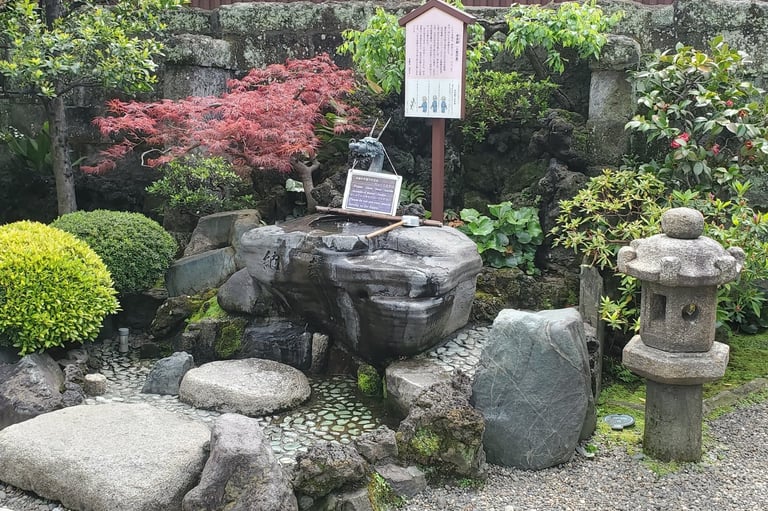
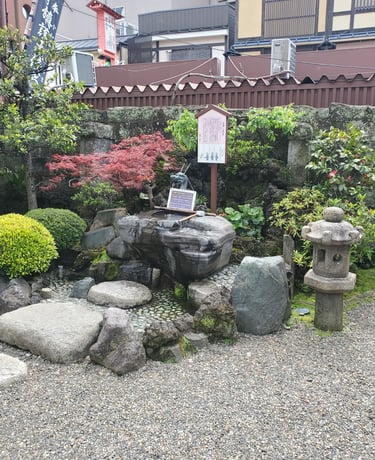
We approached the cleansing fountain near the entrance. At many Japanese shrines, visitors use water there as part of a purification ritual before entering the sacred space. We’d seen it done before.
There were instructions.
Neither Josh nor I stopped to read them.
We remembered what we thought we’d learned from the previous shrines and went ahead.
Josh washed his hands. Then it was my turn.
Suddenly, a woman’s voice came from what seemed like nowhere.
She startled both of us.
There stood a tiny older Japanese woman. She couldn’t have been much taller than four feet, but let me tell you, there was absolutely nothing tiny about her presence.
She was not happy with us.
She quickly made it clear that we were supposed to use the ladle. We weren’t supposed to put our hands directly under the running water.
And there was the sign.
Right there.
The sign we hadn’t bothered to read.
I felt like an idiot.
All I could do was apologize and bow repeatedly. In my mind, she became Big Mama, because the name somehow fit the authority coming out of this tiny woman.
But Big Mama taught me something I’ve remembered ever since.
Don’t assume you know what you’re doing just because you’ve done something similar before.
Read the instructions. Watch what other people are doing. And when somebody tells you you’ve made a mistake, don’t get defensive. Listen. Apologize. Correct it.
Then move on.
Get more advice that will help you travel your way. Join the Tribe and click the button below.
There’s a Difference Between Making a Mistake and Ignoring the Rules
I don’t want to be “that American” when I travel.
What I’m saying is I don’t want to be that visitor—the person who behaves as though my vacation is more important than the people who actually live there.
And unfortunately, I’ve watched it happen.
While I was in Japan, I watched an American family stop in front of a suzu, the bell at a Shinto shrine, with its hanging suzu-no-o rope. There must have been at least 50 people waiting behind them—not simply waiting to see a tourist attraction, but waiting for their turn to approach the shrine and pray.
The family wanted pictures. And not just one quick family picture. Each person seemed to need an individual photograph while everyone waiting to pray stood behind them.
That’s what bothered me.
There’s nothing wrong with taking photographs where they’re permitted. I take plenty of them myself. But this wasn’t simply another attraction on somebody’s vacation itinerary.
It was a place of worship.
The people standing behind them weren’t extras in somebody else’s vacation photos. They were there to practice their faith.
That’s the kind of traveler I never want to become.
I saw something similar at another shrine where visitors were clearly told that photography and video weren’t permitted in a particular area.
Someone was sneaking a video anyway.
That one got to me.
I finally said, “You know you’re not supposed to take videos in here.”
He put his phone away and walked off.
Those experiences bothered me because there is a big difference between accidentally getting a custom wrong and knowingly ignoring a boundary.
I screwed up at the shrine with Big Mama. I wasn’t trying to be disrespectful. I misunderstood what I was supposed to do. Once I realized I was wrong, I stopped and apologized.
That’s all any of us can do.
You’re going to make cultural mistakes when you travel. The goal isn’t cultural perfection.
The goal is respect.
When you’re visiting another place, remember something simple: you’re a guest in somebody else’s home. Your ticket, your vacation schedule and the money you spent getting there don’t give you permission to ignore the people, traditions or sacred spaces that were there long before you arrived.
Travel Smarter: Respecting the culture is only one part of preparing for a trip. Visit my Travel Smarter section for practical advice to help you prepare for the things that can happen before and during your travels.
And Then There Was the Time I Accidentally Went to Wales
Not all of my travel mistakes involve cultural customs.
Some involve getting spectacularly lost.
Before I tell you this story, I should mention that I smoked at the time. I’m certainly not recommending it. It’s simply part of what happened that day and explains the situation I got myself into.
I was in London and had a free day. I’ve always been fascinated by ancient history and the legend of King Arthur, so I decided I wanted to go to Glastonbury.
I went to a train station near my hotel and asked the ticket attendant for directions.
Somewhere between what she told me, what I understood and what I actually did, something went very wrong.
I got on a train. I rode for quite a while. Eventually the train reached the end of the line and I had no choice but to get off. At this point, I knew I was lost.
Really lost.
I found a railway employee who looked approachable and asked for help.
“Where did you come from?” he asked.
“London,” I told him.
His reaction told me everything.
“What? You’re in Wales!”
Apparently, when I get lost, I don’t fool around.
I don’t just miss my stop.
I end up in another country.
Meet Bill
The railway employee’s name was Bill.
Once Bill recovered from the fact that this American woman had somehow managed to leave London intending to visit Glastonbury and end up in Wales instead, he helped me figure out how to get back.
He told me to wait while he went into the office to write down instructions for the train conductor so I could get back to my hotel without paying another fare.
I was incredibly grateful—and also pretty stressed.
While I waited, I went outside and lit a cigarette. I was outdoors, and at the time I assumed that meant smoking was permitted.
Wrong again.
Almost immediately, people started shouting, “No! No!”
I had no idea what was happening, so naturally I started shouting right back, “No! No! No!” while frantically putting out the cigarette.
Once I realized what I’d done, I started apologizing.
Looking back, the whole thing was actually pretty hilarious. There I was, completely lost in Wales, surrounded by people yelling “No!” while I was yelling “No!” right along with them—and I still wasn’t entirely sure what was going on.
That’s when Bill came running over and stood in front of me with his arms out, almost as though he needed to protect me.
Then came the line I have never forgotten:
“It’s okay, she’s an American!”
Oh, great. There I was.
That American.
But Bill wasn’t angry with me. Once he took me outside the restricted area, he lit a cigarette himself, and the two of us stood there smoking and talking.
I learned about him, his family and his years working for the railway. He helped point me toward things I could see while I was there.
And that’s when an embarrassing travel mistake started turning into one of my favorite unexpected travel days.
So I decided to explore.
I ate lunch. I had fish and chips. I wandered through the arcades. I saw the castle area. And in an antique shop, I found a beautiful coral-and-gold ring that I decided to buy as a reminder of this completely unexpected day.
I had a fantastic day.
None of it had been planned.
Sometimes Getting Lost Gives You a Better Story
I could have spent that entire day furious with myself.
I could have decided I’d ruined everything because I didn’t get to Glastonbury.
Instead, Wales became part of the trip.
And that coral-and-gold ring came home with me.
I still have it today. Every time I look at it, I’m reminded of the day I left London intending to see Glastonbury, got on the wrong train, accidentally ended up in Wales, met Bill and discovered that getting lost didn’t necessarily mean my day was ruined.
Years later, the story became even more meaningful when I discovered that I have Welsh ancestry. Of all the places I could have accidentally ended up that day, somehow I landed in a country that was already part of my own history—and I didn’t even know it at the time.
Maybe Wales wasn’t where I intended to go that morning, but I’m awfully glad I went.
Travel plans go wrong.
You miss trains. You misunderstand directions. You accidentally break a custom. You discover that something you thought was perfectly acceptable isn’t. Sometimes you simply have no idea what you’re doing.
The question is what happens next.
You can let the mistake become the whole story.
Or sometimes, if the situation is safe, you can change the story.
That doesn’t mean you should wander around lost without paying attention to your surroundings. Especially when you’re traveling alone, getting lost can become a safety problem. Stop somewhere safe, get your bearings, ask an appropriate person for help and make sure you know how you’re getting back.
But once you know you’re safe?
Maybe the day isn’t ruined after all.
Traveling solo? Read Solo Travel—Safety on the Road for more ways to prepare for the unexpected, protect yourself and still enjoy the freedom that comes with traveling on your own.
Respecting the Culture When Your Body Needs Something Different
There is another side to cultural etiquette that I think is particularly important for travelers with chronic illness, disabilities or limited energy.
Respecting local customs doesn’t mean ignoring what your body needs.
You may need to sit when everyone else is standing. You may need an elevator when most visitors use the stairs. You may need to eat at an unusual time because of medication. You may need mobility assistance. You may have to decline an activity, leave early or find a restroom urgently.
Do what you can to understand the customs and communicate respectfully, but don’t jeopardize your health because you’re afraid of looking different.
Respect the culture, and respect your body too.
Those things can coexist.
And if unpredictable energy is one of the things that makes travel difficult for you, read How to Plan a Trip When Your Energy Is Unpredictable for ways to build a trip around what your body can actually do—not what somebody else thinks your vacation should look like.
Being Polite Doesn’t Mean Ignoring Your Instincts
The same principle applies to safety, especially for solo travelers.
Learning the customs of another country is important. Being respectful is important. But cultural sensitivity doesn’t require you to remain in a situation where you feel unsafe.
If somebody is pressuring you, touching you, following you or trying to get you somewhere you don’t want to go, your first responsibility is getting yourself somewhere safe.
You don’t have to worry about appearing rude when your safety is involved.
There’s a difference between being culturally respectful and surrendering your boundaries.
Know the difference.
Do Your Homework. Then Give Yourself Some Grace.
Before your next trip, learn about where you’re going.
Don’t stop with hotels, airfare and attractions. Learn something about the people. Learn what’s expected. Learn what’s considered rude. Find out whether there are rules about photography, clothing or behavior at the places you’re planning to visit.
And once you get there, keep paying attention.
But please don’t become so terrified of making a mistake that you’re afraid to experience another culture.
You’re going to mess something up eventually.
I certainly have.
When you do, apologize if an apology is appropriate. Correct what you’re doing. Learn from it. Don’t argue simply because something is different from what you’re accustomed to at home.
And sometimes, laugh at yourself.
Big Mama taught me to read the instructions.
Bill taught me that accidentally ending up in Wales didn’t mean I’d ruined my day.
And travel has taught me that some of my favorite stories began with something going completely wrong.
Do your homework. Be respectful. Apologize when you’re wrong. And leave enough room in your travels for a mistake to become a story.
Because sometimes the trip you didn’t plan becomes the one you remember.
Ready to make travel fit your life? Join the Single, Sick & Broke Traveler community for realistic travel advice for solo travelers, spoonies, caregivers and anyone trying to see more of the world without pretending travel—or life—is perfect.


Josh and me right before the shrine

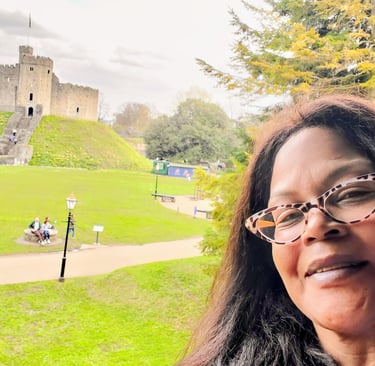
Me in front of Wales Castle in Wales, UK

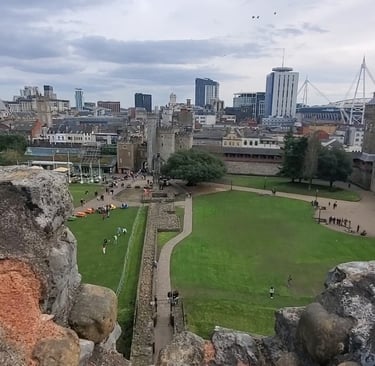
City of Wales, UK


My find at an antique shop in Wales, UK
Shrine in Tokyo--Directions clearly marked


The Single, Sick & Broke Traveler
Travel stories for the brave and budget-conscious.
Contact Me!
© 2025. All rights reserved.