Solo Travel--Safety On The Road
Solo travel safety tips for women traveling alone. Learn how to stay safe in hotels, protect you belongings, avoid scams and travel solo with confidence
SINGLE
singlesickbroketraveler.com
9/19/202511 min read

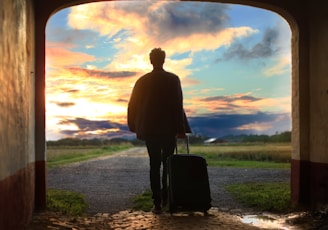
Solo Travel—Safety on the Road
Traveling alone can feel intimidating, especially the first few times you do it. When you're the only person responsible for where you're going, where you're staying, and what happens if something goes wrong, it's easy to start imagining every possible scenario. For women traveling alone, safety is often one of the first concerns that comes up—and it's a reasonable one.
But there's something I've learned from traveling solo: being careful and being afraid are not the same thing.
I've traveled alone in different places, including overseas, and thankfully I've never had a serious safety problem. I don't think that's because I'm fearless or because nothing could ever happen to me. I think preparation, awareness, and trusting my instincts have helped me make better decisions while still allowing me to enjoy where I am.
Solo travel safety isn't about spending your entire vacation looking over your shoulder. It's about doing what you reasonably can to protect yourself—and then actually enjoying the trip you worked so hard to take.
Solo Travel Safety Starts Before You Leave Home
Some of the most important things you can do to stay safe happen before you ever pack your suitcase. Research where you're going, learn a little about the area surrounding your hotel, and figure out how you're going to get around once you arrive. You don't have to investigate every possible thing that could go wrong. You simply want enough information that you aren't arriving completely unprepared.
I like to know how I'm getting from the airport or train station to my accommodations before I arrive. I also want a general idea of how I'll get back to my hotel at the end of the day. If I'm going somewhere unfamiliar, I'll look at the neighborhood, transportation options and recent information about the area.
This kind of preparation doesn't eliminate every risk, but it eliminates some of the uncertainty. And uncertainty can be one of the most stressful parts of traveling alone.
If you're just beginning to consider solo travel, my article I'm Over 50 and Want to Travel Alone—Where Do I Start? is another good place to start. You don't have to figure everything out at once.
Don't Keep Your Money, Cards and Identification All in One Place
One thing I never want is for a lost wallet or stolen bag to leave me completely stranded. That's why I think it's smart to separate important items rather than carrying every credit card, all of your cash and everything else in one place.
You might carry the card you're using during the day in your regular wallet or crossbody bag and keep a backup payment method somewhere else. Having access to emergency money can also help if a card suddenly doesn't work, an ATM is unavailable or something gets lost.
Before leaving home, make sure you know how you would contact your bank or credit-card company if something happened. It's one of those boring travel preparations that doesn't feel very important—until the moment you need it.
The goal isn't to create an elaborate security system. It's simply to make sure one mistake or one missing bag doesn't turn into a full-blown travel emergency.
Make Your Bag a Less Convenient Target
Crowded tourist areas, airports, train stations and public transportation can make it easier for someone to take advantage of a distracted traveler. You're looking for signs, checking your phone, figuring out where you're going and probably carrying more than you normally would at home. That's why I pay particular attention to my belongings in those situations.
A crossbody bag worn close to your body can make it easier to keep track of what you're carrying. Zippers and small clips can add another obstacle for someone trying to quickly get inside your bag. Nothing makes you completely theft-proof, of course, but you don't need to make things easy for someone either.
I also try not to repeatedly pull out my wallet, passport or cash where everyone around me can see what I'm carrying. Small habits like these become second nature after you've traveled for a while.
There are also scams that go far beyond someone simply reaching into your purse. That's why my guide to 35 Travel Scams to Watch For is a useful companion to this article. Knowing what a scam looks like before you encounter it makes it much easier to recognize when something doesn't seem right.
Your Hotel Is Part of Your Solo Travel Safety Plan
When I choose a hotel now, I consider more than the price. Budget absolutely matters to me, but so does whether I'm going to feel comfortable returning to that property by myself at the end of the day.
I look at the location, recent guest reviews, transportation, parking if I'm driving, lighting around the property and the general layout of the hotel. When possible, I prefer accommodations where access to guest areas is somewhat controlled rather than a room that anyone walking by can approach directly.
Once I'm inside my room, I use the locks provided and stay aware of who is around me. I don't announce my room number where strangers can hear it, and I'm cautious about opening the door when I'm not expecting anyone.
None of this means I sit inside my hotel room frightened. Quite the opposite. Choosing a place where I feel comfortable allows me to relax instead of spending the night worrying about my surroundings.
And I learned the importance of that the hard way.
The Motel Stay That Changed the Way I Choose a Room
Years ago, when I was working as a traveling auditor, I stayed in a lot of different places. About six months into the job, I chose a motel primarily because it was convenient to the businesses I needed to visit. I was still fairly new at the job, trying to get everything done and make a good impression, so hotel safety wasn't particularly high on my list of concerns.
That night, I was having trouble sleeping. Cars were coming and going outside, people were talking, and I could hear much more activity than I wanted to hear from inside my room. Eventually everything quieted down enough that I finally fell asleep.
Then I woke up because my headboard was violently moving.
The two men staying in the room next to mine were having sex, and the walls apparently weren't designed with privacy in mind. I could hear just about everything. They weren't doing anything to me, and they probably would have been mortified to know that I was unwillingly participating in their evening from the other side of the wall.
But lying there awake made me think about something more important. My room opened directly to the outside. Anyone around the property could see me coming and going alone, and I didn't feel particularly secure in that room.
That experience changed how I chose accommodations. I stopped asking only, "Is this cheap and convenient?" and started asking, "Will I feel comfortable staying here alone?"
For a solo traveler, that's an important question.
Don't Let Safety Advice Scare You Out of Traveling
There's another side to solo travel safety that I don't think we talk about enough. Sometimes we hear so many warnings about everything that could possibly happen that we scare ourselves out of experiencing anything at all.
There's a difference between being aware of your surroundings and assuming danger is hiding around every corner. I've had to learn that balance myself.
One night in Paris taught me that lesson particularly well.
The Night I Scared Myself in Paris
One evening in Paris, I had a wonderful dinner and walked to the Eiffel Tower to see it lit up at night. It was one of those experiences I'd traveled all that way to have, and I was enjoying myself.
Eventually, I took the train part of the way back to my hotel and walked the rest. As I got closer to where I was staying, the streets became quieter. I could hear my heels clicking against the pavement, and suddenly I became very aware that I was a woman walking alone at night in another country.
My imagination started working overtime.
I began scanning everything around me. Every sound seemed louder. Every person in the distance suddenly became someone I needed to evaluate. Within a few minutes, I had managed to make myself nervous even though nothing had actually happened.
Then I thought about the town where I grew up. There were places there far rougher than the Paris neighborhood I was walking through. Nobody was following me. Nobody had approached me. Nobody was threatening me. I was frightening myself because I had become hyperaware of being alone.
So I adjusted. I stayed aware of my surroundings, kept walking confidently and paid attention to what was happening around me—but I stopped treating every shadow like a threat.
That night has stuck with me because it represents the balance I try to maintain when I travel now: pay attention, take sensible precautions, but don't let fear steal your vacation.
Walk Like You Know Where You're Going
I don't always know exactly where I'm going when I'm traveling. That's part of travel. But I try not to advertise the fact that I'm completely lost.
If I need to look at directions, I'll stop somewhere appropriate and check my phone rather than wandering around staring at the screen. I try to walk with purpose, even if I need to stop a few minutes later and make sure I'm still headed in the right direction.
I also like to learn a little about local customs before traveling somewhere new. I don't need to pretend I'm a local—I obviously won't be in many places—but understanding what's considered normal or respectful can help me feel more comfortable and avoid drawing unnecessary attention to myself.
Confidence isn't some magical shield that guarantees nothing bad will happen. It simply helps you move through an unfamiliar place with greater awareness.
Have a Backup Plan for Your Phone
Think about how much of your trip now lives inside your phone. Your boarding pass might be there. Your hotel reservation is there. Your maps, transportation apps, emergency contacts, credit cards, photographs and itinerary may all be there too.
Now imagine that your phone disappears.
That's why I think every solo traveler should have some kind of backup. It might be as simple as having your hotel's name and address written somewhere, knowing an emergency contact's phone number, carrying a backup payment method and making sure important travel documents can be accessed another way.
You don't need to print a three-inch binder for every vacation. You just want to make sure losing one device doesn't mean losing your ability to function.
Trust Your Gut—and Give Yourself Permission to Leave
Sometimes there's no dramatic reason that a person or situation makes you uncomfortable. Something simply feels wrong.
Pay attention to that feeling.
If someone makes you uncomfortable, you don't owe them a conversation. If somebody wants you to go somewhere isolated and you don't want to go, say no. If a tour, ride or situation doesn't feel right, leave. You don't have to stay somewhere because you're worried about appearing rude.
At the same time, I don't want fear to prevent me from talking to people or experiencing a destination. I've met wonderful people while traveling. I've asked strangers for directions, talked to locals, taken recommendations and enjoyed experiences I never could have completely planned before leaving home.
Being cautious doesn't mean closing yourself off from the world. It means maintaining control over where you go, what you do and who you trust.
Learn how you can make travel fit your life. Become apart of the Single, Sick and Broke Traveler! Click on the button below.
A Simple Solo Travel Safety Check Before You Head Out
Before I head out for the day, there are a few basic things worth thinking about. Do I know roughly how I'm getting back? Is my phone charged? Do I have access to another payment method? Do I know the name and address of where I'm staying? Am I carrying only what I actually need?
If appropriate, I also make sure someone knows where I am or has access to my basic itinerary. You don't need someone tracking every move you make, but having another person know your general plans can provide an additional layer of reassurance.
And here's one question I think is especially useful: If my phone disappeared right now, could I still figure out what to do next?
If the answer is yes, you've probably done a pretty good job of preparing.
Solo Road Trips Require a Little Extra Preparation
Solo road trips are wonderful because they give you an enormous amount of freedom. You can stop when you want, change your plans, take a detour or decide that you've had enough for the day. But traveling alone by car also means you're the one who has to deal with things if the car breaks down, you run low on fuel or you get too tired to keep driving.
I try not to let my gas tank get dangerously low, especially when I'm driving through an unfamiliar or remote area. I also don't want to wait until I'm exhausted to figure out where I'm going to sleep. Knowing roughly where you'll stop and having a basic plan for roadside problems can prevent a small inconvenience from becoming a much bigger problem.
If you're planning this kind of trip, read Road Trip Traveling Solo next. It goes more deeply into the things that are specific to being on the road by yourself.
Solo Travel Isn't About Proving You're Fearless
You don't have to be fearless to travel alone. I'm certainly not.
What you need is enough preparation to make reasonable decisions and enough confidence to trust yourself when plans change. That confidence doesn't necessarily arrive before your first solo trip. For me, much of it came because I traveled.
Every time I figured out a train system, checked into a hotel alone, changed a plan, solved a problem or sat down for dinner by myself, I learned that I could handle more than I thought I could.
That's one of the greatest things solo travel has given me.
You aren't required to travel the way someone else travels. Maybe you're comfortable wandering around a city until midnight. Maybe you'd rather be back at your hotel by eight. Maybe you love public transportation. Maybe you'd rather pay a little more for a ride because it makes you feel more comfortable.
Those choices are yours.
Prepare, Pay Attention—and Then Enjoy Your Trip
Safety matters whether you're traveling alone, with a partner, with friends or as part of a group. Research your destination, protect your money and belongings, choose accommodations thoughtfully, pay attention to your surroundings and trust yourself when something doesn't feel right.
Then give yourself permission to enjoy where you are.
You didn't do all that planning, saving, packing and traveling just to spend your vacation afraid of everything that might happen. Take reasonable precautions and remember that being prepared is supposed to give you more freedom, not less.
Travel solo. Travel carefully. Travel confidently.
Most importantly, get there your way.
Want More Real-World Solo Travel Help?
If you're trying to figure out how to travel when life, health or money don't always cooperate, you're exactly who I created The Single, Sick & Broke Traveler for.
Join the Tribe for practical solo travel, chronic illness, budget and Travel Smarter advice designed for real life. Click the button.
And if you're planning your next adventure, visit my Solo Travel section for more ideas, advice and encouragement for traveling on your own.
Travel information on this site is provided for general informational purposes. Conditions, safety concerns and travel requirements can change. Research your destination and use your own judgment when making travel decisions.


The Single, Sick & Broke Traveler
Travel stories for the brave and budget-conscious.
Contact Me!
© 2025. All rights reserved.