The Invisible Bucket List: Adventures Every Spoonie Woman Over 40 Deserves Before She Stops Waiting
You don't have to jump into a big vacation to start traveling again. Discover 50 gentle adventures for Spoonie women over 40 that fit your body, your budget, and your life. Learn how to ease back into travel one meaningful moment at a time and begin creating beautiful memories—no matter your health or circumstances.
BROKESINGLE
singlesickbroketraveler.com
7/10/202616 min read


The Invisible Bucket List: Adventures Every Spoonie Woman Over 40 Deserves Before She Stops Waiting
It's funny how life can change in an instant.
When it does, we often believe our lives are over. But sometimes, what feels like an ending is actually the beginning of an entirely new chapter.
When I was diagnosed with rheumatoid arthritis and fibromyalgia, everything changed. I left my dream job in Los Angeles and moved back home. I was devastated. My body no longer worked the way I was used to. My finances changed overnight. The life I had worked so hard to build no longer existed, and I slipped into a deep depression.
Slowly, I learned something that would change my life. Instead of fighting my body every day, I began learning how to work with it. My mom and I saved every penny we could and built a little house in a new town. For two and a half wonderful years, life felt peaceful again. Then tragedy struck.
Looking for a bunny, my mother's wheelchair tipped over, shattering her femur. Eleven days later, she was gone. I can only describe those days as feeling like I'd been thrown into a tornado. I honestly believed life couldn't hurt any more than it already had. Until it did.
My beloved grandfather was overwhelmed with grief after losing his oldest of two daughters. Soon afterward, he was diagnosed with liver and pancreatic cancer among several other serious health problems. Teddy—my mom's service dog—and I moved in to care for my grandfather during his final weeks. Thirty days later, he passed away too.
Just when I thought I had survived the hardest chapter of my life, another one began. Not long after my grandfather passed away, I was diagnosed with lupus and hypertrophic cardiomyopathy. Once again, I found myself facing an uncertain future and wondering what my life would look like now. It would have been easy to believe my traveling days were over for good. Instead, I slowly learned something that has become one of the greatest lessons of my life: sometimes we don't rebuild the life we lost—we build a different one that can be just as meaningful.
Life keeps changing. Your dreams don't have to end because your circumstances do.
Looking back, I honestly don't know what I would have done without Teddy. Soon after, I adopted Lola, my miniature poodle, and those two dogs gave me a reason to get up every morning. Sometimes healing doesn't begin with a grand plan. Sometimes it begins simply by having someone who still needs you.
For a long time, I wasn't living. I was surviving.
Then something unexpected happened. Oddly enough, a garage sale I had was the turning point that brought true joy to my life.
After a garage sale, I had about $1,200. The money came from selling belongings that had belonged to my mother, my grandparents, and me. I wanted to use it for something meaningful—something that honored all of us.
Then I remembered a dream I'd been putting off for years.
The Star Wars Celebration in Florida.
I'd wanted to attend ever since the first convention in 1999, but like so many dreams, I kept saying, "I'll go later."
Later finally arrived.
I was nervous.
I hadn't traveled in more than ten years.
But I went anyway.
That one trip changed my life.
Although my career in Los Angeles had required frequent travel and I had always enjoyed traveling solo, somewhere along the way I'd convinced myself those days were over.
They weren't.
That trip reminded me that adventure wasn't something I'd lost. It was something I simply needed to rediscover in a new way.
Today, travel is one of the greatest joys in my life. I make it a priority to visit somewhere new every year, even if it's just a small adventure close to home.
And that's exactly what I want for you.
You don't have to jump into a two-week vacation or fly across the world to begin traveling again.
You can start with a scenic drive.
A quiet beach.
A small-town café.
A botanical garden.
A museum you've never visited.
One beautiful afternoon can become the beginning of an entirely new life.
That's what this Invisible Bucket List is all about.
It's not about checking off famous destinations.
It's about rediscovering joy, rebuilding confidence, and creating meaningful memories that fit your body, your budget, and your life.
No matter where you are today, I hope this article encourages you to take that first gentle step.
Because sometimes the biggest new beginnings start with one small adventure
You don't have to feel well every day to live a meaningful life.
There is a quiet kind of grief that many women living with chronic illness carry, especially after turning forty. It isn't always visible to friends or family, and sometimes we don't even admit it to ourselves. It is the grief of watching our lives become smaller—not because we stopped dreaming, but because pain, fatigue, financial struggles, and uncertainty slowly convinced us that dreaming no longer belonged to us.
For many Spoonie women, travel becomes one of the first dreams to disappear. We begin telling ourselves that we'll take the trip after the next surgery, after retirement, after our medications finally work, after our energy returns, or after our savings account grows. We promise ourselves that life will begin again someday.
Then someday quietly turns into years.
One of the hardest truths about chronic illness is that it doesn't simply change your body. It changes your expectations. The adventurous woman who once loved road trips, museums, beaches, or wandering through new towns often begins believing that those experiences are now reserved for healthier people. We slowly stop looking at travel magazines, ignore vacation advertisements, and decline invitations because saying "maybe next year" hurts less than admitting we don't believe we can go. Look at my article, Stop waiting for the perfect time to travel to discover why you should travel despite your circumstances.
But what if we've been measuring adventure the wrong way?
What if the problem isn't that we can no longer travel like we did at twenty-five? What if the problem is that we've never given ourselves permission to redefine what adventure looks like now?
That is where the Invisible Bucket List begins.
Unlike the traditional bucket list filled with mountain climbing, skydiving, or expensive international vacations, an Invisible Bucket List is deeply personal. It is built around your body, your budget, your energy level, and your season of life. It celebrates meaningful moments instead of impossible expectations. It reminds us that life is measured by experiences, not miles walked.
This isn't settling. It is adapting.
There is tremendous strength in choosing to build a beautiful life within the reality you live today instead of waiting for a future that may never arrive exactly as you imagined.
Why Spoonie Women Stop Dreaming
Most people assume that chronic illness limits us because of physical symptoms alone. Pain, fatigue, dizziness, mobility challenges, and unpredictable flare days certainly affect our choices. Yet many of the greatest barriers aren't physical at all. They're emotional.
Living with chronic illness often means becoming an expert at canceling plans. We've canceled vacations because our bodies wouldn't cooperate. We've disappointed family members who couldn't understand why we weren't feeling well enough to go. We've spent money on nonrefundable reservations only to stay home. Eventually, many of us stop planning altogether because disappointment feels safer than hope.
That emotional self-protection slowly becomes our normal.
We begin editing our dreams before anyone else has the chance to tell us they aren't realistic.
We convince ourselves that travel belongs to younger people, healthier people, wealthier people, couples, or retirees with unlimited energy. Meanwhile, our own world quietly shrinks until even driving to a nearby town begins to feel like an impossible undertaking.
The heartbreaking part is that this happens so gradually we hardly notice it.
Years later, we may realize we haven't watched a sunset from somewhere new, explored a local garden, eaten lunch beside a lake, or visited a charming small town in a very long time. Our lives become filled with appointments instead of adventures.
That isn't because we've stopped wanting joy.
It's because chronic illness has taught us to lower our expectations so many times that we've forgotten we are still allowed to have them.
The Single, Sick and Broke Traveler has so much to offer! Sign up with your email and get freebies like The Traveler's Workbook, The Spoonie's Traveler's Workbook, monthly newsletter and much more! Enter your email below.
Your Bucket List Doesn't Need Anyone Else's Approval
One of the greatest gifts you can give yourself after forty is letting go of someone else's definition of adventure.
Social media often shows glamorous vacations filled with endless walking tours, luxury hotels, crowded attractions, and perfectly posed photographs. Those experiences are wonderful for the people who enjoy them, but they are not the only way to experience the world.
Maybe your dream is spending one peaceful night in a cozy cabin only thirty miles from home.
Maybe it's riding a scenic ferry while wrapped in your favorite sweater.
Maybe it's finally visiting that botanical garden you've driven past for years.
Maybe it's finding the best homemade pie in your state.
Maybe it's watching birds from a lakeside bench with a hot cup of coffee.
Those moments count.
In fact, they may become more meaningful than the trips you took when life moved too quickly to appreciate them.
As we grow older, many of us discover that slowing down isn't failure. It's a different way of noticing beauty. We begin appreciating conversations with locals, quiet mornings, fresh air, blooming flowers, peaceful overlooks, and simple moments that once rushed past unnoticed.
The Invisible Bucket List celebrates exactly those experiences.
Instead of asking, "How far can I go?" it asks a far more important question:
"What beautiful experience can my body enjoy today?"
That one shift changes everything.
Tiny Adventures Can Rebuild Confidence
One of the most surprising benefits of gentle travel is that it rebuilds something many Spoonies quietly lose over time: confidence.
Chronic illness constantly teaches us what we can't do. Every flare, canceled appointment, or difficult day becomes another reminder of our limitations. Eventually, we begin identifying ourselves by what we've lost instead of what remains possible.
Tiny adventures interrupt that story.
Perhaps your first adventure is driving twenty minutes to watch the sunset.
Next month, you take a scenic train ride.
Later in the year, you spend one night in a bed-and-breakfast close to home.
Each experience quietly reminds you of something powerful:
"I can still create memories."
Those memories become evidence that your life is still unfolding.
They remind you that you are still curious. Still capable. Still adventurous. Still growing.
Perhaps most importantly, they remind you that chronic illness has changed your journey, but it has not ended it.
One of the biggest misconceptions about adventure is that it has to be expensive, physically demanding, or far from home to be meaningful. That simply isn't true.
Many Spoonie women spend years believing that if they can't backpack across Europe, hike through national parks, or keep up with fast-paced tours, then travel has somehow passed them by. But life isn't measured by passport stamps or miles walked. It is measured by the moments that make us feel alive.
An Invisible Bucket List isn't about checking off accomplishments for anyone else to admire. It's about collecting experiences that remind you your life is still growing. Every item on your list is proof that you refused to let chronic illness write the final chapter of your story.
Instead of focusing on what your body can't do today, ask yourself a different question:
"What experience would bring me joy with the energy I have?"
That simple question changes everything.
Rediscover the Beauty Close to Home
We often believe adventure begins after hours on an airplane, but some of the most memorable experiences happen surprisingly close to where we live. Exploring nearby destinations removes many of the stresses that come with long-distance travel while still giving you the excitement of discovering something new.
Your Invisible Bucket List might include:
- Visit a botanical garden during peak bloom.
- Watch a sunrise from somewhere you've never seen before.
- Drive a scenic byway you've always meant to explore.
- Find a quiet lake and spend an afternoon reading.
- Visit a nearby lighthouse.
- Wander through a historic downtown district.
- Explore a local farmers market.
- Discover a hidden park you've never visited.
- Take a slow drive during autumn leaves or spring wildflowers.
- Visit a state park, even if you only stay for an hour.
These gentle outings require less planning, cost far less than major vacations, and allow you to return home before exhaustion becomes overwhelming. They also help rebuild confidence because they're achievable, even on a limited energy budget.
Create Food Memories Instead of Tourist Checklists
Many travelers rush from attraction to attraction without slowing down long enough to enjoy the experience. Spoonie travel often invites us to do the opposite.
Sometimes the destination isn't a famous landmark. Sometimes it's the little café you've wanted to try for years.
Food has an incredible way of connecting us to places and creating memories that last long after the trip is over. Read my post, Want to eat well? Travel! This article will show how food makes travel even better!
Your bucket list could include:
- Find the best homemade pie within fifty miles.
- Visit a family-owned bakery.
- Try afternoon tea.
- Eat fresh seafood overlooking the water.
- Find a diner that's been open for generations.
- Sample local ice cream on a warm afternoon.
- Pack a simple picnic for a park or beach.
- Visit a roadside fruit stand.
- Try a cuisine you've never experienced before.
- Enjoy dessert first without feeling guilty.
These experiences are affordable, accessible, and wonderfully memorable because they're about savoring life rather than racing through it.
Feed Your Curiosity
Growing older doesn't mean growing less curious. In many ways, chronic illness teaches us to appreciate learning because it allows us to experience the world at our own pace.
Curiosity is adventure.
Your Invisible Bucket List could include places such as:
- Small local museums.
- Historic homes.
- Art galleries.
- Sculpture gardens.
- Wildlife refuges.
- Aquariums.
- Butterfly gardens.
- Planetariums.
- Heritage villages.
- Local history museums.
Many of these destinations offer benches, climate-controlled buildings, accessible entrances, and opportunities to rest while still enjoying something beautiful. They remind us that slowing down often allows us to notice details we've overlooked for years.
Collect Moments Instead of Miles
One of the greatest lessons many Spoonies learn is that meaningful travel isn't measured by distance.
Some of the most treasured memories come from moments that lasted only a few minutes.
Maybe it's watching waves crash against the shore.
Watching birds gather around a quiet marsh.
Listening to rain while sitting on a covered porch.
Finding the perfect bench overlooking a mountain valley.
Watching boats drift through a harbor.
Watching the stars on a clear summer evening.
Taking photographs of wildflowers.
Listening to live music in a community park.
Watching children laugh while flying kites.
Reading a favorite novel beside a peaceful river.
These aren't "small" experiences.
They're the moments we remember years later because they helped us feel present instead of rushed.
Gentle Adventures That Heal the Soul
Living with chronic illness often means spending enormous amounts of time focused on medical appointments, medications, symptoms, and recovery. Those responsibilities are real, but they shouldn't become the only story we tell ourselves.
Healing isn't always medical.
Sometimes healing happens emotionally.
Sometimes healing happens spiritually.
Sometimes healing begins the moment we allow ourselves to enjoy something beautiful again.
Consider adding experiences like these to your Invisible Bucket List:
- Watch the sunrise with a cup of coffee.
- Watch the sunset from somewhere peaceful.
- Listen to ocean waves without checking your phone.
- Walk barefoot in the sand if you're able.
- Write in a journal from a park bench.
- Visit a lavender farm.
- Spend an afternoon cloud watching.
- Feed ducks at a quiet pond where permitted.
- Listen to birdsong in the early morning.
- Watch a gentle snowfall from a cozy cabin or café.
These adventures don't require perfect health.
They simply require permission to enjoy the life you're living today.
The Goal Isn't to Finish the List
Traditional bucket lists often feel like another accomplishment we have to earn. We pressure ourselves to complete every item before time runs out.
The Invisible Bucket List works differently.
There is no deadline.
There is no competition.
There is no prize for finishing first.
The purpose isn't to complete fifty adventures.
The purpose is to remind yourself that your life is still capable of holding wonder, curiosity, laughter, peace, and joy.
Some years you may cross off ten adventures.
Other years you may only manage one.
That one still counts.
Because every experience is a declaration that chronic illness may influence your life, but it does not define its value.
Every sunrise watched, every quiet garden explored, every scenic drive enjoyed, every meal shared with a friend, and every beautiful memory collected becomes another reminder that your story is still unfolding.
Perhaps your Invisible Bucket List won't look like anyone else's.
Maybe that's exactly what makes it beautiful.
How to Create Your Own Invisible Bucket List
If you've read this far, I hope one thing has become clear:
Your adventure isn't over.
It may look different than it did twenty or thirty years ago. It may require more planning, more rest breaks, and more flexibility than you ever imagined. You may need to pack medications before you pack clothes, research accessible bathrooms before choosing a destination, or schedule recovery days after a simple outing. None of those realities make your experiences less meaningful. My article, Traveling with chronic illnesses part one--Managing medications and part two--Managing limitations will help you prepare for your vacation.
They simply make them yours.
Creating your own Invisible Bucket List begins with letting go of the idea that every adventure has to be extraordinary. Some of the richest memories are built from ordinary moments experienced with fresh eyes.
Start by asking yourself a few gentle questions.
What have I always wanted to see?
What place have I driven past a hundred times but never stopped to explore?
Where do I feel peaceful?
What makes me smile?
What have I been postponing because I assumed I wasn't healthy enough?
The answers may surprise you.
You might discover that your heart has been quietly holding onto dreams you almost forgot you had.
Plan for Your Energy, Not Someone Else's
One of the greatest lessons many Spoonies learn is that energy is just as valuable as money.
You can always earn more money.
You cannot always create more energy.
Instead of planning a day packed with activities, choose one meaningful experience and let that be enough. Build extra time into your schedule. Rest before you're exhausted instead of after you've reached your limit. If you're traveling farther from home, consider staying an extra night rather than trying to squeeze everything into one exhausting day. Read Traveling as a spoonie: How to see the world without burning out teaches you how to pace yourself when you travel.
Many women spend years feeling guilty for taking breaks.
Please don't.
Rest is not quitting.
Rest is part of the adventure.
When you begin honoring your body's needs instead of fighting against them, you'll often discover you enjoy your experiences far more because you aren't constantly trying to keep up with everyone else.
Budget-Friendly Adventures Are Still Real Adventures
One of the biggest myths in the travel world is that memorable experiences require expensive vacations.
Some of my favorite travel memories have little to do with money and everything to do with how they made me feel.
A scenic drive with the windows down.
Finding a quiet café where no one is rushing you.
Watching waves roll onto the shore.
Exploring a charming bookstore in a town you've never visited.
Eating pie at a family-owned diner.
Listening to live music in a local park.
Many of these experiences cost very little, yet they stay with us for years because they create moments of connection instead of simply checking another destination off a list.
If finances are tight, create a "Joy Fund." Even setting aside five or ten dollars whenever you can may eventually pay for a tank of gas, lunch in a nearby town, admission to a garden, or a peaceful afternoon somewhere you've always wanted to explore.
Adventure doesn't always require a passport.
Sometimes it simply requires saying yes to a place you've never taken time to enjoy.
Give Yourself Permission to Change the Plan
One of the hardest emotional challenges of living with chronic illness is accepting that plans sometimes need to change.
A flare may arrive unexpectedly.
The weather may become overwhelming.
Your body may ask for rest instead of sightseeing.
That doesn't mean your day is ruined.
It simply means the adventure is taking a different path.
Perhaps instead of walking through a historic district, you find a comfortable café overlooking the street and spend an hour people-watching.
Instead of hiking to a scenic overlook, you discover an accessible viewpoint where you can enjoy the same breathtaking landscape.
Instead of spending an entire afternoon exploring, you spend thirty wonderful minutes somewhere beautiful before heading home.
There is incredible freedom in replacing perfection with flexibility.
The goal isn't to force your body to fit your plans.
The goal is to create plans that honor your body.
You Are Not Behind
If there is one message I hope every woman reading this carries with her, it is this:
You are not behind.
Social media may tell you that everyone else is traveling farther, hiking higher, spending more, or living bigger.
Life isn't a race.
There is no prize for seeing the most countries or collecting the most passport stamps.
What matters is whether you are still making memories that bring you joy.
Your Invisible Bucket List may include watching your first sunrise in years.
It may include taking your granddaughter to feed ducks.
It may include renting a cabin for one peaceful weekend.
It may include finally seeing the ocean again after decades away.
Every one of those moments matters.
Every one of those memories becomes part of the beautiful story you're still writing.
One Last Thought From My Heart to Yours
If you're a Spoonie woman over forty, I want you to know something.
You have already overcome challenges many people will never fully understand.
You've learned to live with uncertainty.
You've learned resilience.
You've learned patience.
You've learned how to keep moving forward, even on days when your body begged you to stay still.
Those qualities make you stronger than you probably realize.
So don't wait for the perfect diagnosis.
Don't wait until the pain disappears completely.
Don't wait until you have more money.
Don't wait until someone else can go with you.
And please don't wait until you believe you're worthy of living again.
Life is happening now.
Your story is still unfolding.
Your next favorite memory may be only twenty minutes from your front door.
The world doesn't need the younger version of you.
It doesn't need the healthier version of you.
It doesn't need the version of you that existed before chronic illness.
The world simply needs you—as you are today.
So buy the pie.
Watch the sunset.
Take the scenic drive.
Sit beside the lake.
Visit the little museum.
Laugh with a stranger.
Take the ferry.
Smell the lavender.
Collect the memories.
Then write them down.
Because your Invisible Bucket List was never about reaching the end.
It was always about remembering that even after illness, after loss, after setbacks, and after fifty...
There are still beautiful places waiting for you.
And there is still a beautiful life waiting to be lived.
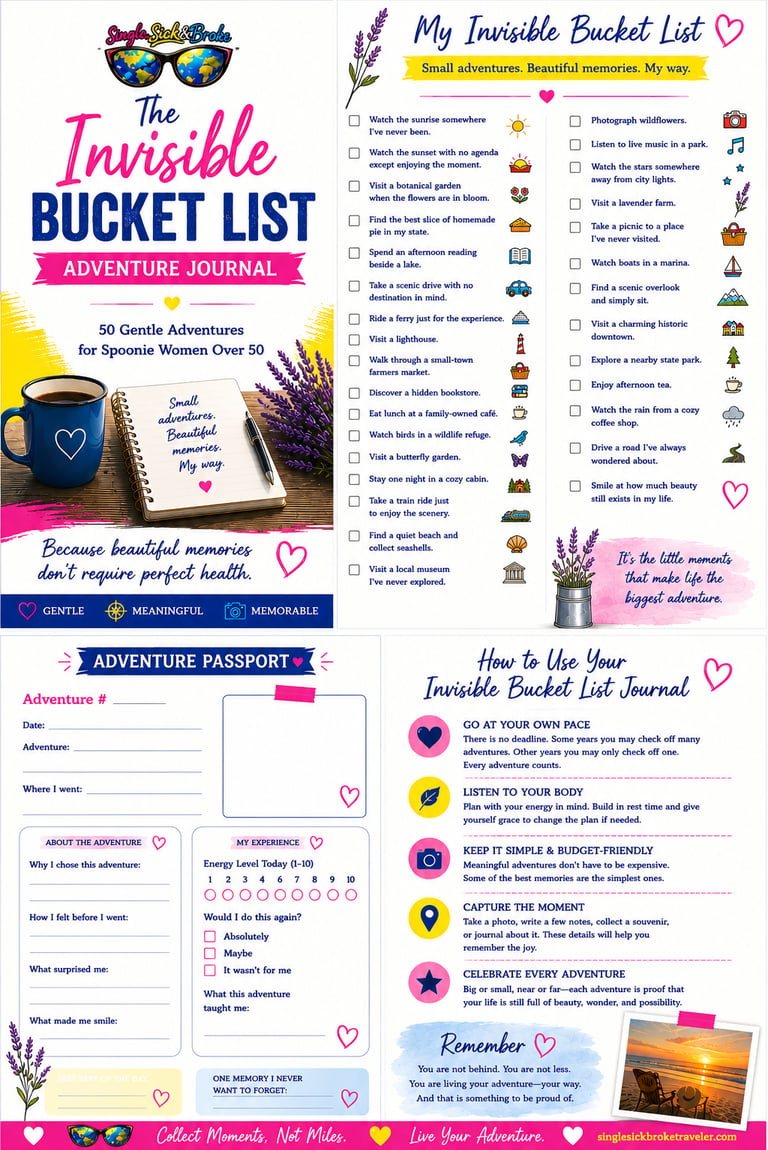
Below is my Invisible Bucket List. It's a guide you can use to plan out your travel dreams. Feel free to print as many copies you need and modify it for your personal needs. Happy Travels!
Left click on The Invisible Bucket List to download and click to sign up to be part of the Single, Sick and Broke Traveler community!
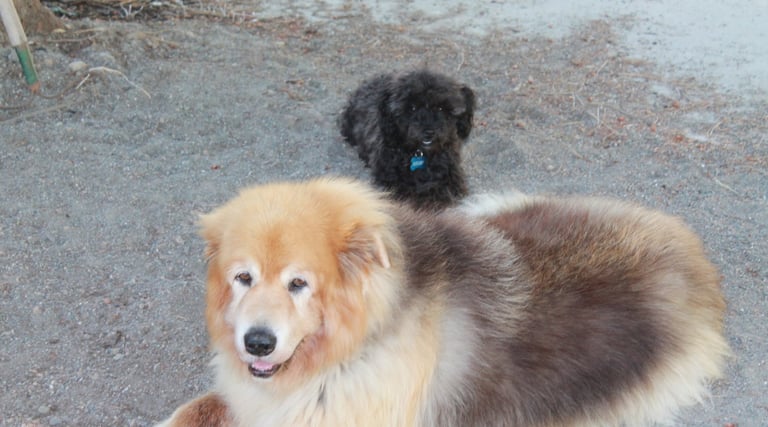

My mom's service dog, Teddy and my little Lola Ann


Me at my first Star Wars celebration with Darth Vader
The Single, Sick & Broke Traveler
Travel stories for the brave and budget-conscious.
Contact Me!
© 2025. All rights reserved.